Scrolling Back to 1979: Why Blondie's Cold Wave DNA Is Powering TikTok's Hottest Sounds Right Now
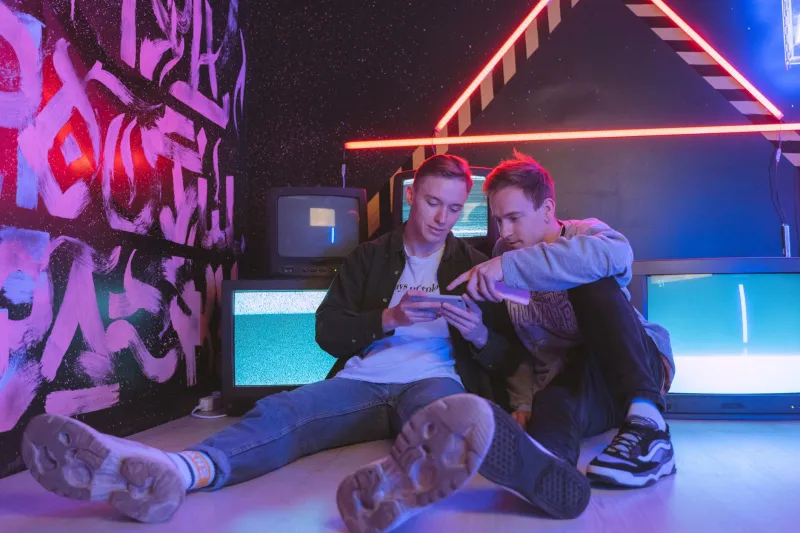
There's a particular kind of sonic texture that keeps showing up in your For You Page whether you're into indie sleaze revivalists, hyperpop, or those weirdly compelling lo-fi aesthetic videos. It's cold. It's precise. It's got this mechanical pulse underneath it that somehow still feels emotional. You've heard it a hundred times this week alone.
What you're hearing, whether anyone's crediting it or not, is the ghost of Blondie.
Deborah Harry and the band she fronted didn't just make pop records. They engineered a specific kind of atmosphere — call it cold wave, call it new wave minimalism, call it whatever genre label feels comfortable — that embedded itself so deeply into the DNA of American alternative music that it keeps resurfacing every time a new generation goes looking for something that feels both futuristic and emotionally raw. Right now, that generation is on TikTok, and the Blondie effect is everywhere.
The Sound That Refuses to Age
Let's get specific about what we're actually talking about when we say "cold wave DNA." Blondie's late-70s and early-80s catalog — particularly records like Eat to the Beat, Autoamerican, and deep cuts from Parallel Lines — had a production quality that was genuinely ahead of its time. Producer Mike Chapman helped the band strip arrangements down to their essential elements: punchy, dry drums with almost no reverb, synth lines that moved in angular, unexpected intervals, and Deborah Harry's voice sitting right at the front of the mix with an eerie, detached clarity.
That combination of emotional distance and melodic precision is basically the aesthetic template for half of what's trending on TikTok right now. The current wave of artists making what gets tagged as "dark pop" or "indie electronic" — think the production choices behind artists like Ethel Cain, Magdalena Bay, or even certain corners of Charli XCX's catalog — are working in a sonic space that Blondie mapped out decades before any of them were born.
When the Algorithm Found "Atomic"
Here's where it gets concrete. In 2022 and into 2023, Blondie's "Atomic" started appearing in TikTok videos at a frequency that felt almost algorithmic in itself. The track's opening synth figure — that descending, slightly dissonant line over a four-on-the-floor pulse — turned out to be perfect for the kind of slow-burn aesthetic content that thrives on the platform. Dark bedroom lighting, vintage fashion hauls, moody urban photography. The audio fit like it was made for it.
Creators weren't necessarily thinking "I want to use a Blondie song." They were searching for audio that matched a specific emotional register, and the algorithm kept surfacing "Atomic" because it delivers exactly what that register demands: tension, coolness, and a rhythm that pulls you forward without ever letting you fully relax. That's a production philosophy, not an accident.
Similar patterns emerged with "Rapture" — particularly the instrumental sections — showing up in videos about New York City, 80s nostalgia aesthetics, and hip-hop history content. The track's place as one of the first rap-adjacent songs to hit number one on the Billboard Hot 100 makes it genuinely relevant to that last category, but plenty of creators were just vibing on the sonic texture.
Gen Z Producers Are Running the Playbook
Beyond direct sampling and trending audio clips, there's a more diffuse but equally significant influence happening at the production level. A generation of bedroom producers raised on hyperpop and now pivoting toward something more textured and "real-sounding" are gravitating toward the exact aesthetic choices that defined Blondie's peak years.
The dry drum sound is back in a massive way — you can hear it in the production work of artists like Caroline Polachek, whose collaborators have explicitly cited new wave as a touchstone, and in the DIY indie electronic scene that's been bubbling up through platforms like SoundCloud and Bandcamp before crossing over to TikTok virality. The preference for synth lines that feel slightly "wrong" — not quite consonant, not quite dissonant — is another Blondie signature that keeps resurfacing.
What's interesting is that when you ask younger producers about their influences, you often get names like Chromatics, Crystal Castles, or even newer acts. But if you follow those influence chains back far enough, you almost always end up somewhere in the New York new wave scene of the late 70s. And at the center of that scene, more often than not, was Deborah Harry.
The Visual Language Connection
It's not just about the music, either. TikTok is a visual platform, and the aesthetic that Blondie helped define — that particular combination of punk edge, downtown cool, and almost surreal glamour — has become enormously influential in the way Gen Z creators construct their visual identities online.
The "downtown girl" aesthetic that went massively viral in late 2023, driven partly by a certain Bruno Mars and Lady Gaga collaboration, has deep roots in exactly the kind of New York street-meets-art-world look that Deborah Harry embodied in the late 70s. The thrifted leather, the platinum hair, the sense that glamour and grit aren't opposites — that's a visual vocabulary Harry helped invent, and it translates directly to the kind of aspirational self-presentation that TikTok rewards.
An Unsung Architect Gets Her Due (Sort Of)
Here's the complicated part: most of the creators participating in this cultural moment aren't explicitly citing Blondie. The influence is operating at a level below conscious reference — absorbed through the music that influenced the music that influenced them, filtered through decades of pop history until it arrives on a smartphone screen in 2024 stripped of its original context.
That's both a testament to how thoroughly Deborah Harry's aesthetic vision has been absorbed into the mainstream and a mild frustration for anyone who cares about musical lineage. The architecture is everywhere. The architect's name is often missing.
But there are signs that's starting to change. Music history content on TikTok — the "you need to know about this" genre of educational short-form video — has been increasingly circling back to Blondie as a foundational act. Younger listeners who discovered the band through a trending sound are going back and actually listening to the records. And when they do, they tend to have the same reaction: this sounds like it was made last year.
That's the Blondie effect in its purest form. Not nostalgia. Not retro. Just a sound so precisely constructed that it keeps arriving in the present tense, no matter how many years separate it from the moment it was made. Deborah Harry didn't just make great records. She built something that the future kept needing to borrow.