Still Running the Studio: How Blondie's Disco-Punk Experiments Became the Operating System of Modern Pop
There's a moment in "Heart of Glass" — that slight mechanical stutter in the drum pattern, the way the synthesizer sits just underneath Deborah Harry's vocal like a second pulse — where you can hear something shift. It doesn't sound like 1979. It doesn't even sound like a specific era. It sounds like now. That's not an accident, and it's not nostalgia playing tricks. It's the result of a band that was essentially building tools they didn't have names for yet, and a production philosophy that the music industry is still catching up to.
Blondie didn't stumble into innovation. Working closely with producer Mike Chapman and engineer Roy Thomas Baker, among others, they made deliberate, sometimes controversial choices that fused the raw, confrontational energy of CBGB punk with the four-on-the-floor pulse of New York's disco underground. The result was something that confused radio programmers, delighted critics, and — as it turns out — gave the next several decades of pop music a detailed instruction manual.
The Machine Underneath the Band
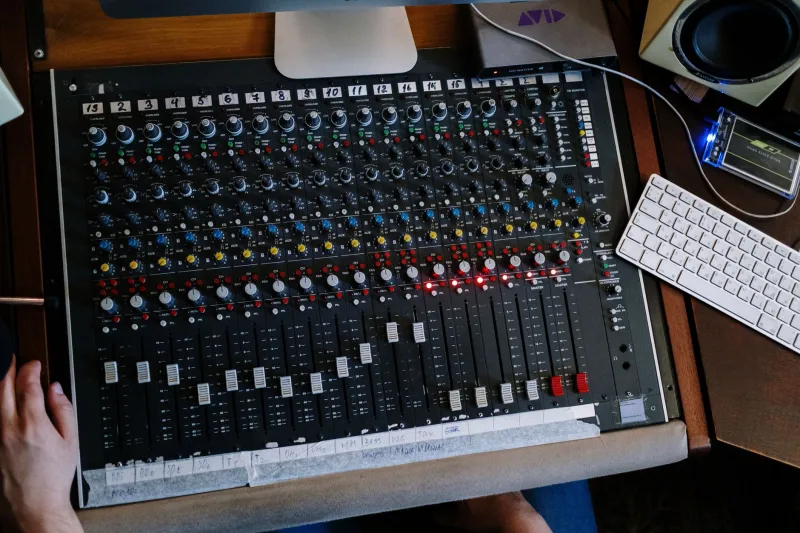
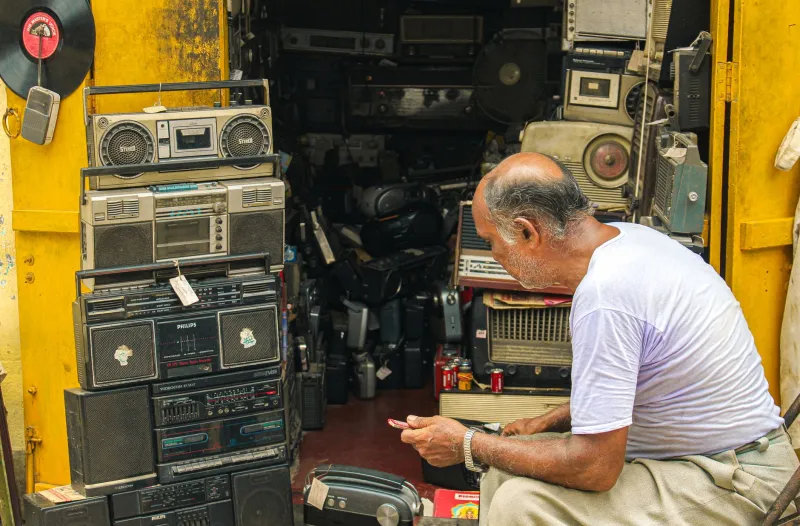
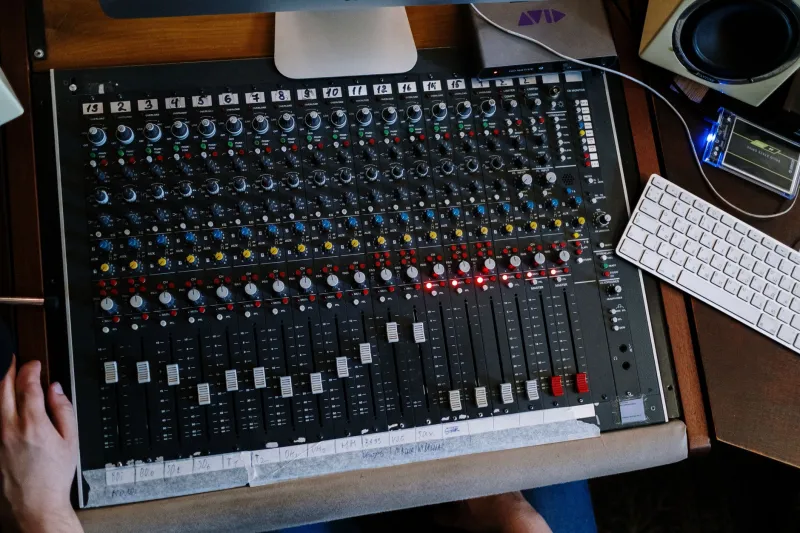
Before the Roland TR-808 became the backbone of hip-hop and R&B, before drum machines were considered anything other than a novelty or a cost-cutting measure, Blondie were treating electronic rhythm as a compositional tool with the same seriousness they brought to guitar arrangements. "Heart of Glass" was famously built around a Donna Summer-inspired disco beat programmed on an early drum machine, layered beneath live instrumentation. At the time, some rock purists were horrified. In retrospect, it reads as a founding document.
Producers working today point to that exact tension — the organic and the synthetic rubbing up against each other without either one winning — as something they actively chase. "When people ask me how to make a record feel alive but still precise, I usually tell them to go listen to Blondie," says one Brooklyn-based producer who has worked with artists across the indie pop and hyperpop spaces. "They figured out that the machine doesn't have to flatten the emotion. It can actually heighten it. That's still not an easy thing to pull off."
Synth Choices That Became a Template
It wasn't just the rhythm section. Blondie's keyboard and synthesizer work on records like Parallel Lines and Eat to the Beat reflected a careful curation of texture — bright, clean tones that could cut through a dense mix without overwhelming the vocal. Harry's voice was always the anchor, and every production decision seemed to orbit that fact. The synths weren't there to show off. They were there to serve the song.
This is something that contemporary pop production has taken to heart in ways that don't always get credited back to the source. The emphasis on frequency space — making sure the vocal sits in a register that nothing else clutters — is now standard practice in mixing and mastering. But Blondie were doing it intuitively at a time when the tools to measure and analyze those decisions barely existed. They were working by ear, and their ears were right.
A mixing engineer who has worked on major-label releases across country, pop, and electronic music describes it this way: "There's a clarity in those Blondie records that a lot of people assume comes from modern digital processing. But it was achieved with analog gear and smart arrangement. They weren't filling every inch of the sonic space. They left room. That's a discipline a lot of producers today still struggle with."
Punk Attitude, Pop Precision
What made Blondie's approach genuinely radical wasn't any single technique — it was the philosophical stance behind the whole operation. They came out of a punk scene that was allergic to polish, but they refused to treat craft as a compromise. Harry, Chris Stein, and their collaborators understood that a great pop song and an artistically uncompromising vision weren't mutually exclusive. You could have a hook that lodged itself in someone's brain for forty years and a production that rewarded close listening. You didn't have to choose.
That dual commitment — populist and experimental at the same time — is what contemporary producers describe as the hardest thing to replicate. "Anyone can make something weird," notes one Nashville-based producer who has been vocal about Blondie's influence on his own work bridging country and electronic sounds. "Anyone can make something catchy. Making something that's both, and making it feel effortless? That's the trick Blondie cracked, and most people are still trying to figure out how they did it."
The Rap Connection Nobody Talks About Enough
Blondie's early and enthusiastic embrace of hip-hop — most famously on "Rapture," which became one of the first rap-adjacent songs to hit number one on the Billboard Hot 100 in 1981 — wasn't just a cultural moment. It was a production experiment that demonstrated what happened when you grafted a completely new rhythmic and vocal tradition onto the band's existing sonic framework. The result was looser, more spacious, built around groove and negative space in a way that rock production rarely attempted.
The influence of that specific choice — treating rap not as a gimmick but as an equal structural element — echoed forward through decades of genre fusion. The pop-rap hybrid that dominated the charts through the '90s and 2000s has a direct ancestral line that runs through "Rapture." Producers who work in that hybrid space today may not cite Blondie explicitly, but the logic of what they're doing was road-tested in that recording session.
What the Textbooks Leave Out
Here's the thing about Blondie's production legacy: it doesn't always show up where you'd expect it to. You won't find it in the official canon of "classic rock" production history, because Blondie never quite fit that category. You won't always find it in hip-hop origin stories, even though "Rapture" belongs there. You won't always find it in electronic music histories, even though the band's synthesizer work was genuinely ahead of the curve.
What you will find, if you go looking, is a generation of producers who will tell you — sometimes in the same breath they're talking about Quincy Jones or Brian Eno or Rick Rubin — that Blondie records were formative. That they wore out those albums trying to understand how certain sounds were achieved. That there's something in the production philosophy of Parallel Lines or Autoamerican that still feels unsolved, still feels like it's pointing somewhere the industry hasn't fully arrived at yet.
That's the real Blondie effect. Not just the hits, not just the cultural moments, but the ongoing lesson embedded in those recordings: that the boundaries between genres are production choices, not laws of nature. That a drum machine and a guitar can coexist without either one apologizing. That a voice like Deborah Harry's, given the right sonic architecture, can sound like it was recorded yesterday.
Because in every studio that matters, in some form, it still is.