She Said Yes So the Rest of Us Could: The Deborah Harry Effect on a Generation of Rule-Breaking Women
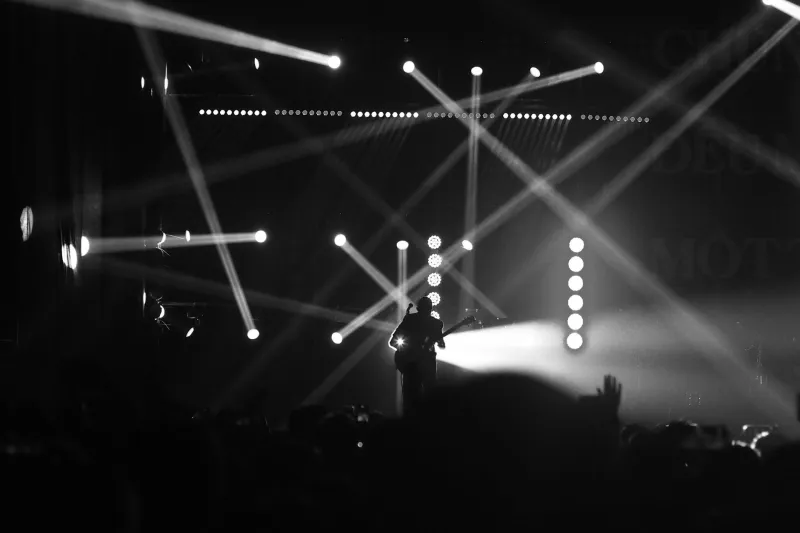
There's a moment in a 1979 concert footage clip that fans of a certain vintage have watched dozens of times. Deborah Harry walks to the lip of the stage, microphone in hand, and just stops. She doesn't perform for the crowd so much as she surveys it — cool, unhurried, like someone who arrived exactly when she meant to. Then she opens her mouth, and the whole room reorganizes itself around her.
That pause. That stillness before the storm. It's a tiny thing, but it tells you everything about what made Deborah Harry different — and why so many female musicians in the decades that followed point to her as the moment they understood what was actually possible.
The Permission Nobody Gave Her
Let's be clear about the context. When Blondie was clawing its way through the CBGB circuit in the mid-70s, the options for women in rock were narrow and heavily policed. You could be the sensitive singer-songwriter, the blues-adjacent belter, or the arm candy standing slightly behind the male guitarist. The idea of a woman who was simultaneously sexually provocative and intellectually in control, who could front a punk band one night and flirt with disco the next, who could weaponize femininity instead of apologizing for it — that was genuinely radical.
Deborah Harry didn't ask for permission to be all of those things at once. She just was. And that refusal to negotiate her own complexity became, for a generation of women watching from bedrooms and basement shows across America, something close to a manifesto.
She's talked in interviews about not consciously thinking of herself as a trailblazer in those early years — she was too busy surviving the industry to theorize about her place in it. But intention and impact aren't always the same thing. What she did intuitively, other women received as instruction.
Androgyny as a Power Move
One of the most underappreciated aspects of Harry's early visual identity is how deliberately she played with gender signals. The bleached hair was a nod to Marilyn Monroe, sure, but the ripped T-shirts, the confrontational stare, the way she could shift from pin-up to predator within a single verse — that was something else entirely. She wasn't softening her edges to make male audiences comfortable. She was using every tool available, masculine and feminine alike, and daring you to categorize her.
This mattered enormously to artists who came of age in the 80s. Chrissie Hynde, Siouxsie Sioux, and later figures like Gwen Stefani have all, in various interviews, circled back to that specific quality in Harry's presentation — the refusal to be one thing. Stefani, in particular, has described the Blondie era as foundational to her understanding that a frontwoman could be tough and pretty, weird and commercial, underground and mainstream, without any of those combinations canceling each other out.
That's not a small inheritance. That's the entire aesthetic framework of No Doubt, handed down through a lineage that runs straight back to a woman doing something nobody had quite done before on a tiny stage in lower Manhattan.
The Body as Instrument
Deborah Harry was one of the first women in rock to fully understand — and deploy — physical presence as a compositional element. Not in the sense of being conventionally attractive (though she was, in a way that made critics uncomfortable because it complicated their narratives about punk being anti-beauty). Rather, she understood that how a performer occupies space is part of the song.
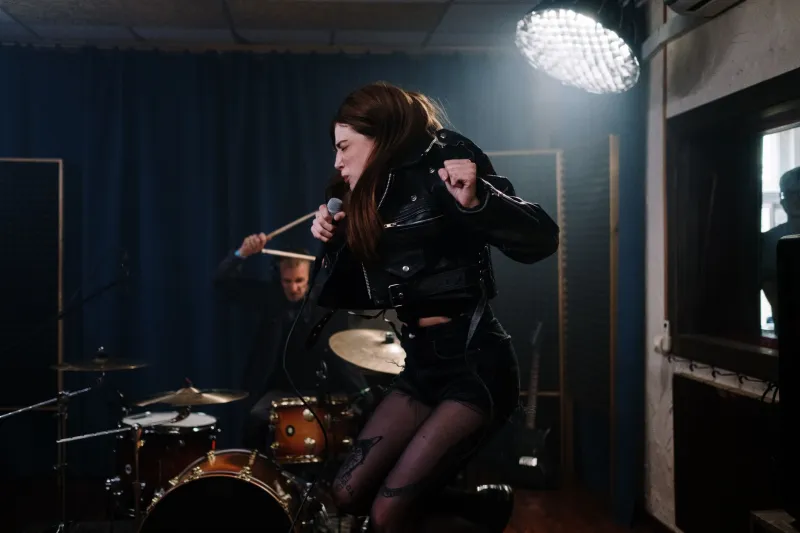
She moved like someone who owned every square foot of whatever stage she stood on. Not aggressively, not in the high-energy, hair-whipping mode that became a cliché later — but with a kind of sovereign ease. She could stand perfectly still and generate more tension than most performers create with a full choreographed set.
Artists like PJ Harvey, St. Vincent's Annie Clark, and Hayley Williams have each, in their own ways, inherited this understanding. Clark in particular has spoken about the idea of the guitar as an extension of the body, of performance as a total physical statement — and when you trace that philosophy back, you find Harry standing at the CBGB mic, teaching a masterclass nobody officially enrolled in.
When the Industry Pushed Back
It would be dishonest to tell this story without acknowledging what Harry was up against. She faced the full weight of an industry that wanted to package her as a pretty face and sideline the rest. Record executives who didn't understand why she needed creative input. Critics who reduced Blondie's complexity to her cheekbones. The persistent, exhausting attempt to make her less than she was.
The fact that she didn't shrink — that she kept co-writing, kept pushing the band into new sonic territory, kept showing up on her own terms even when the commercial pressure was enormous — is itself part of the lesson she passed down. Because younger artists weren't just watching what she did when things were going well. They were watching what she did when the industry tried to diminish her. And what she did was keep going.
That's the part of the Deborah Harry effect that doesn't always make the highlight reels but may be the most important: she modeled endurance as a creative act. She showed that surviving the machinery with your identity intact was its own form of artistic statement.
The Quote That Keeps Circulating
There's a line that gets attributed to Harry in various forms across music journalism, something to the effect that she never thought of herself as a feminist icon, she just thought of herself as someone doing what she wanted. Whether or not that's an exact quote, it captures something real about her approach — and about why it worked so well as a model for others.
The women who came after her didn't need her to be a theorist. They needed her to be an example. And an example she absolutely was — of someone who decided, at some foundational level, that the rules of the music industry were suggestions at best and irrelevant at worst, and then proceeded to act accordingly.
Billie Eilish talking about refusing to let her body be a marketing tool. Lizzo reclaiming the stage as a space where her specific kind of presence is not just acceptable but dominant. Olivia Rodrigo writing songs that are too angry and too specific to be easily digestible pop. All of these women are operating inside a freedom that has a history — and a significant chunk of that history belongs to a platinum-haired woman from New Jersey who walked to the edge of a stage in 1979, looked out at the crowd, and waited.
The Legacy That Keeps Paying Out
What's remarkable about the Deborah Harry effect is that it compounds rather than fades. Each generation of women who absorb her influence and then break their own rules in turn creates a new wave of permission for the women watching them. The lineage is long and still growing.
She didn't set out to build a dynasty of fearless female artists. She set out to make the music she wanted to make, look the way she wanted to look, and occupy stages the way she felt they deserved to be occupied. But that's often how the most durable cultural legacies work — not through grand gestures, but through someone simply refusing to be less than they are, over and over again, until the world adjusts to fit them.
Deborah Harry adjusted the world. The receipts are everywhere.